Palantir Ontology Explained: What It Is and How It Works

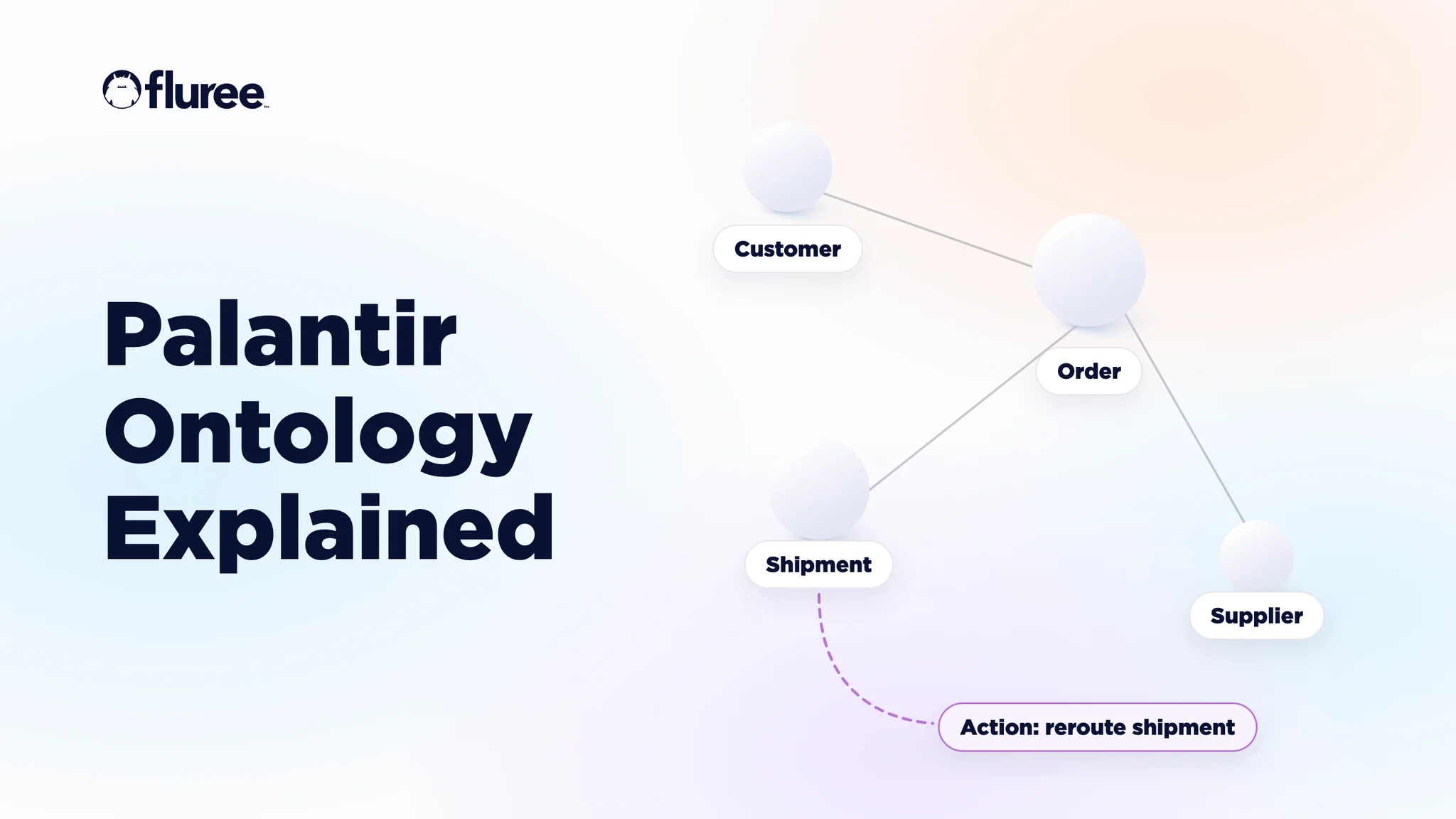
The Palantir Ontology is the operational layer of Palantir Foundry. It maps datasets, virtual tables, and models to the things a business runs on, such as plants, customer orders, and transactions, and adds the actions people and AI agents can take on them.
What is Palantir Foundry?
Palantir Foundry is Palantir’s data operations platform. Teams use it to integrate data, build pipelines, define the Ontology, and run applications and AI agents on top. The Ontology is the part that sets it apart from a data warehouse or lakehouse.
What is the Palantir Ontology?
Palantir’s documentation calls the Ontology “an operational layer for the organization.” It sits on top of integrated digital assets and connects them to real-world counterparts, and in many settings it serves as a digital twin of the organization.
It has two halves.
The semantic layer: objects, properties, and links
This is the vocabulary. An object type is a kind of thing, such as Plant or Customer Order. Properties describe it, and link types say how objects relate. Instead of joining tables, an analyst or agent works with “this order, its customer, its shipment.”
The kinetic layer: actions and functions
This is the part most data models lack. Action types define the permitted ways to change data, with parameters, rules, and submission criteria. Functions hold business logic. Dynamic security controls who can see and do what.
The result is that a change goes through a defined, permissioned path rather than an ad hoc update.
How do developers and agents use it?
- Ontology SDK: the OSDK exposes the Ontology through npm for TypeScript, pip or Conda for Python, Maven for Java, and an OpenAPI spec for other languages.
- Ontology MCP: generally available since June 2026, it exposes object types, action types, and functions as tools for any MCP-compatible agent.
- Agent templates: July 2026 templates cover the Claude Agent SDK, OpenAI Agents SDK, and Google ADK.
So “closed” is too simple a description. Outside code can reach the Ontology. Portability of the model itself is the separate question.
How does it differ from an OWL or RDF ontology?
The word “ontology” means two different things here. In the W3C world it means a formal description of concepts that software can reason over. At Palantir it means an operational model of the business.
Neither is a superset of the other. OWL has no concept of a permissioned action, and Foundry is not built around open-world logical inference.
Is the Palantir Ontology portable?
This is the question to raise before signing, and the public answer is unsettled.
A September 2026 post on Palantir’s developer community notes that a Palantir white paper says Foundry can import and export RDF and OWL natively, while the Ontology Manager documentation describes a JSON format and warns the schema may change. The author built their own converter and reported that 7 of 22 property types had no counterpart in any published standard. It is one user’s report, and the thread had no public answer when we read it in October 2026.
Ask Palantir to show the supported path for your model, and ask what happens to action types and functions, which have no standard equivalent.
When does each approach fit?
The Palantir Ontology fits when:
- People and agents need to take governed actions across operations from one platform
- You want one vendor to supply the data platform, model, security, and applications
- You need its government accreditations, including FedRAMP High, IL5, and IL6
- Speed to a working application matters more than unit cost
An open-standards ontology fits when:
- Your data platform is staying and the gap is shared meaning for AI
- You need the model to outlive a vendor or be shared with partners and regulators
- Formal reasoning and validation matter, as they do in life sciences and finance
- You already have taxonomies or ontologies in RDF or OWL
Plenty of teams need something in between. For the options by layer, see our guide to Palantir competitors and alternatives, and for the wider market, the best context layer platforms.
Frequently Asked Questions
Stay in the loop
Weekly insights on enterprise AI, knowledge graphs, and data intelligence.