
Industry
One Intelligence Layer, From Supplier Contract to Shelf
How one governed graph connects supplier contracts, sourcing, and product data to trade decisions, with early warnings from supplier documents in the same picture.
We use cookies. Privacy choices
We use cookies to operate this site, measure performance, and improve your experience. See our Privacy Policy or manage your privacy choices.
Supply chain traceability is the ability to follow a product and its materials through every supplier, plant, and carrier, and to prove each step with records. Fluree delivers it on FlureeDB, its verifiable knowledge graph database: data from every party linked into one governed model, with the history and lineage behind each fact.
Works with



Supply chain traceability is a verifiable record of where a product and its inputs came from, where they went, and what happened at each step. It answers three questions on demand: where did this come from, where did it go, and what else is affected?
Tracing backward runs from a finished product to its lots, suppliers, and origins. Tracing forward runs from a suspect lot to every product, shipment, and customer it reached. Visibility tells you where things are now; traceability proves where they have been. The hard part is that the evidence sits with suppliers, plants, and carriers that no single company controls.
Scanners and tags capture events. Fluree connects them: one governed knowledge graph where every identifier, event, document, and supplier record links to the next, and every fact keeps its source and its history.
Because the records live in systems you don’t control. In McKinsey’s supply chain risk pulse survey (December 2025), 95% of respondents could see risks at their tier-one suppliers, but only 42% could see into tier two or beyond.
Every supplier, plant, and distributor keeps its own version of the item. Attributes conflict across ERP, PIM, and partner feeds, and nobody can say which record is right, or why.
When a port closes or a supplier fails, answering “what’s affected?” means stitching disconnected systems together by hand. Impact analysis takes days while the disruption compounds by the hour.
Trade documentation and ESG reporting demand provenance you can prove. Today the evidence lives in emails, spreadsheets, and supplier portals, rebuilt from scratch every audit cycle.
Agree on identifiers, resolve every record, capture events with their sources, and share by policy. Each step lands in the same governed graph, so the next one builds on it.
Model suppliers, sites, lots, and products once, on shared identifiers such as GS1 GTINs and GLNs. Fluree AI governs the shared vocabulary every source maps to.
Fluree maps ERP, PIM, and partner tables into the graph and merges duplicate suppliers and SKUs into golden records, with lineage to every source.
Supply chain events load as JSON-LD, a syntax GS1’s EPCIS 2.0 standard already defines. Fluree turns certificates, contracts, and supplier notices into facts that cite their source document.
FlureeDB enforces access policy on every query, so each partner sees only the facts it’s entitled to. It keeps every change, so you can ask what was known on any past date.
See it on a working model. The Consumer Goods demo kit traces a fictional manufacturer’s cocoa from farm plots through farmer groups, buying stations, and tier-two and tier-one suppliers to the products on shelf, records each movement as a GS1 EPCIS 2.0 event, and shows where physical identity stops at a mass-balance pool.
The same governed graph sits underneath four supply chain outcomes. Start with the one that hurts most; every later use case inherits the work.
Resolve duplicates and conflicting attributes from every source system into one governed record per supplier and per SKU, with lineage back to each contributing system, so “which record is right?” has an answer.
Clean, deduplicated, semantically consistent product data that AI agents, search, and syndication can trust, instead of a catalog your team works around.
Model suppliers, sites, lanes, and SKUs as one network graph. When something breaks, “what’s exposed downstream?” becomes a query you run in seconds, not a project you staff for a week.
Every attribute carries provenance you can trace, and policy is enforced at the data layer. When the auditor asks where a number came from, the answer is already attached to it.
With Fluree, the company unified five disparate product-data sources, surfaced a 48% duplicate rate, and reached 97.5% product-data accuracy, with golden records in production in three weeks.
97.5%
Product-data accuracy across the unified catalog
48%
Duplicate rate discovered and resolved
3 weeks
From five raw sources to production golden records
Short answers to what supply chain and data leaders ask us most.
Visibility shows where goods and orders are right now: shipments in transit, stock at a site, an order’s status. Traceability is the historical record of which lots, suppliers, and sites a product passed through, backed by evidence. Visibility helps you react; traceability lets you prove.
Because regulators now ask for proof on a deadline. The FDA’s Food Traceability Rule requires records of key data elements for critical tracking events, delivered within 24 hours of a request, with a compliance date of July 20, 2028. The EU Deforestation Regulation applies to large and medium operators from December 30, 2026, for cocoa, coffee, palm oil, soy, cattle, wood, and rubber.
No. Fluree takes supplier data in the forms suppliers already send: ERP and PIM extracts, partner tables, EPCIS events, and documents. If you choose to share data back, access policy decides exactly which facts each partner can query.
No. Fluree connects them. To build golden records, it queries warehouse and lake tables where they live, or maps extracts into the graph, so the systems that run operations keep running while the graph links their records.
W3C standards throughout: RDF and JSON-LD for data, SPARQL for queries, and SHACL for validation rules. That lines up with GS1’s EPCIS 2.0, which defines a JSON-LD syntax for supply chain events. JSON-LD is the format FlureeDB stores natively.
Golden records keep lineage to each contributing system, extracted facts cite the document they came from, and FlureeDB keeps every change in an immutable history you can query as of any past date. An audit trail becomes a query, not a project.
Writing from the Fluree team on interoperability, provenance, and FAIR data: the principles this page is built on.
How one governed graph connects supplier contracts, sourcing, and product data to trade decisions, with early warnings from supplier documents in the same picture.
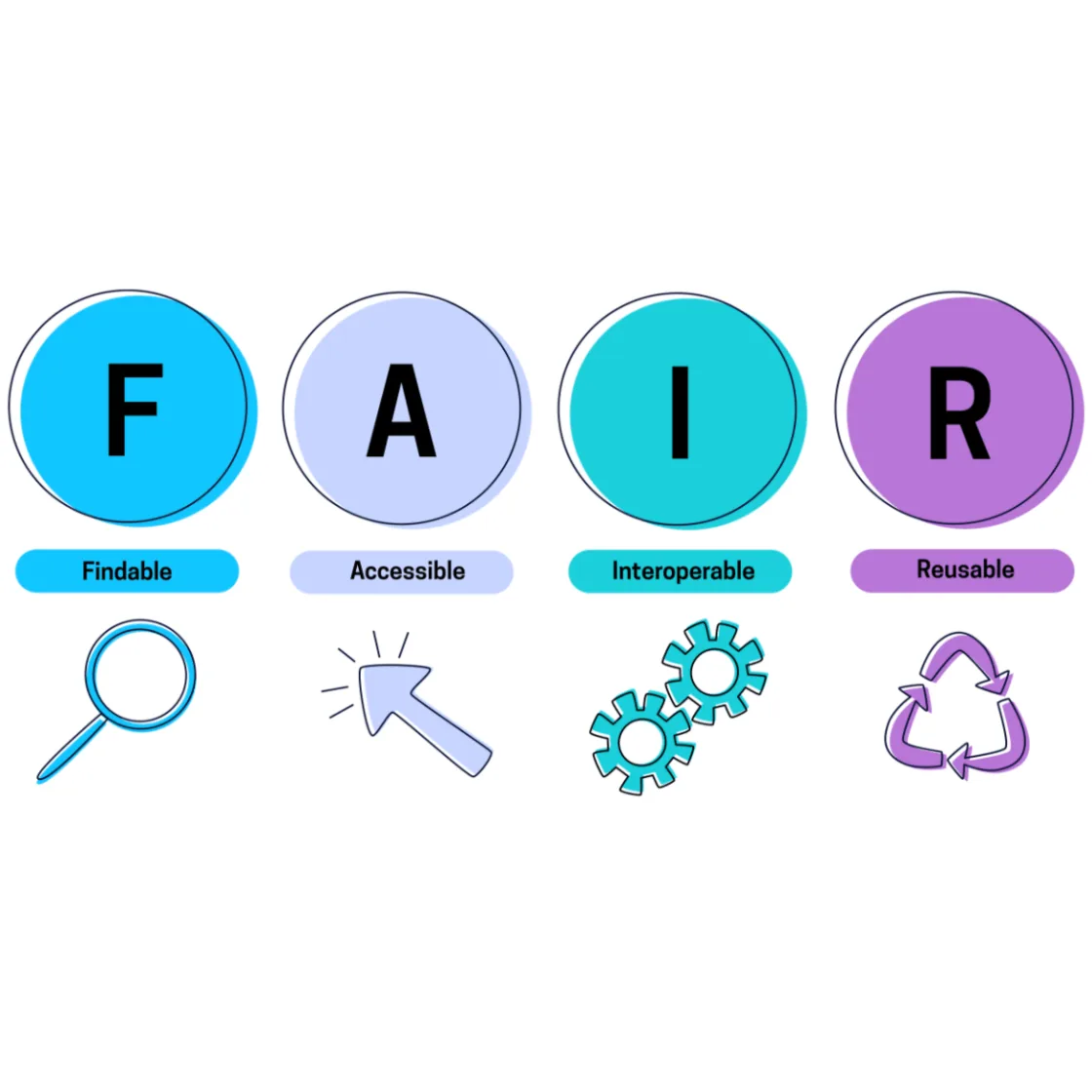
Findable, accessible, interoperable, reusable: the standards-based framework for machine-readable, AI-ready enterprise data.

Why an immutable record of how data changes over time is the foundation for audit, compliance, and traceability.
A 30-minute demo on your own product and supplier data. See how a governed graph traces, resolves, and proves across every partner and system.
Updated